July 16, 2026
Chili, Modularity, and Love
Where do I end and where do you begin?
How do you trace the edges of reality? Where do I end, and where do you begin?
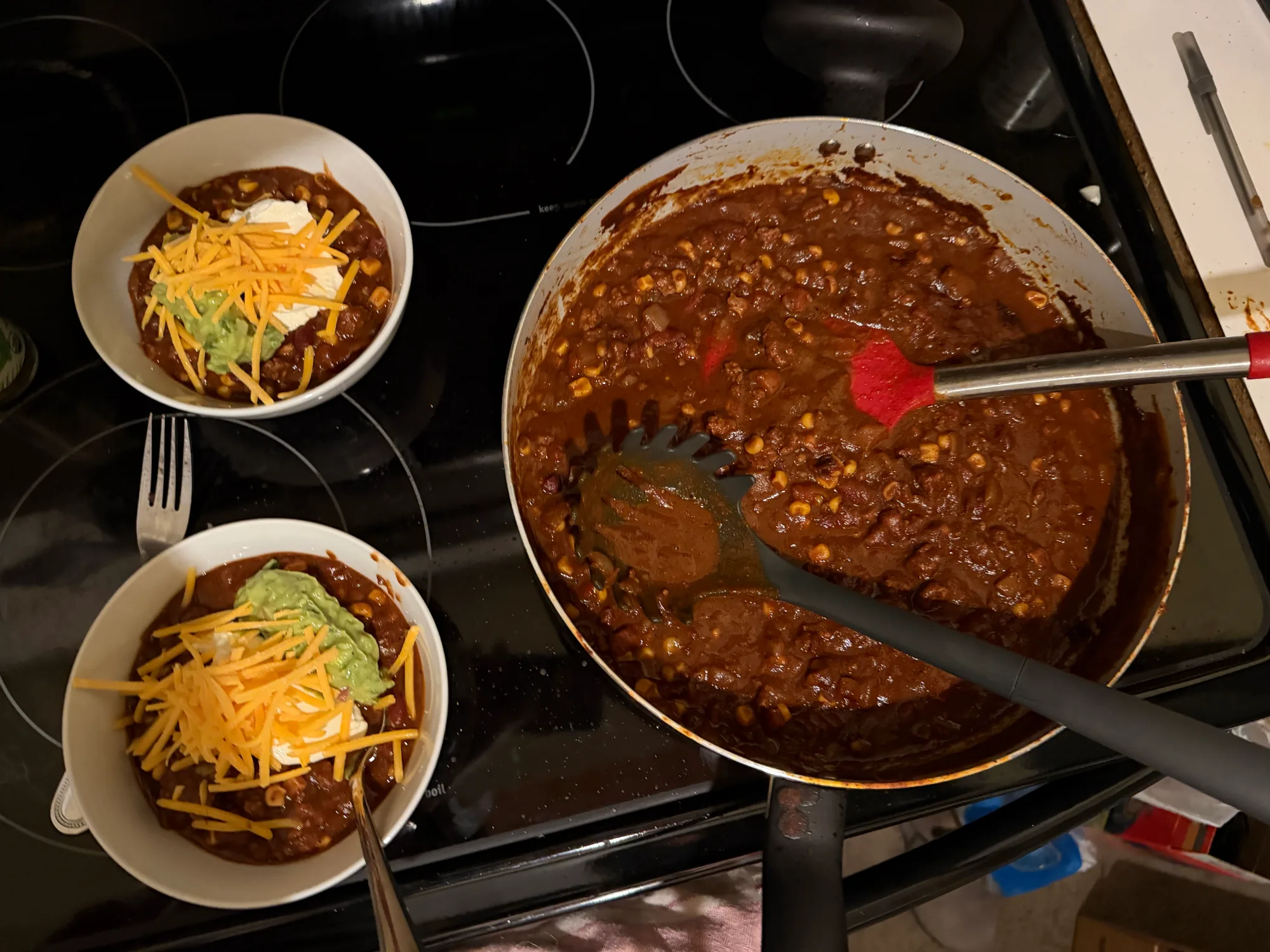
Yesterday I made a big pot of chili. I LOVE CHILI. I love how easy it is to make, how deeply flavorful it is, and how fun it is to make with other people.
I had a friend over, and it was quite a gloomy day in SOMA. The sun was hot, and the air was humid in a way that made you sticky but didn’t give you the grace of sweating.
The original game plan was to walk around the Dogpatch Boardwalk and get sushi at my favorite restaurant in San Francisco: Umi, this cute little hole-in-the-wall sushi store tucked away in Potrero that always loops Enigma’s Sadeness on repeat. But sticky weather and raw fish don’t always mesh well, and I’ve also been feeling a bit of a homebody recently, so I suppose chili is a great complement.
We found an online “easy chili recipe” and walked down to Whole Foods to get everything. While navigating the many aisles looking for ground beef, beans, and other ingredients, I remembered a conversation I had earlier with Sahiti, in which she asked, “What exactly does modularity mean?” and I realized that the term “modular” is extremely buzzy and unclear.
Food is modular and ingredients practice modularity. But I don’t actually have a definition of a module. I want to zoom more into the module itself. For chili, the ingredients dictate that each module be one of the listed ingredients, but as someone with lactose intolerance, the recommended sour cream module must be broken down into Lactaid and sour cream. Or maybe for someone with an intolerance for non-fresh ingredients, the module begins with soaking kidney beans and boiling them by hand rather than popping a can open.
My point is that the meaning of module really is just the wrapping around the rawest ingredients: do you choose to boil beans yourself or do you accept the pre-packaged metal can? When do the advantages of remaking outweigh the friction of making the module from scratch? Is the chili seasoning I bought ideal, or would it have tasted better if I'd had a chili expert come in and help me fine-tune a seasoning melody to the next level…
Once designers realized they could break things into components, group layers, and add procedural effects, they began making really beautiful UIs with brilliant micro-interactions and algorithmic design systems that allow a sort of grammar to emerge.
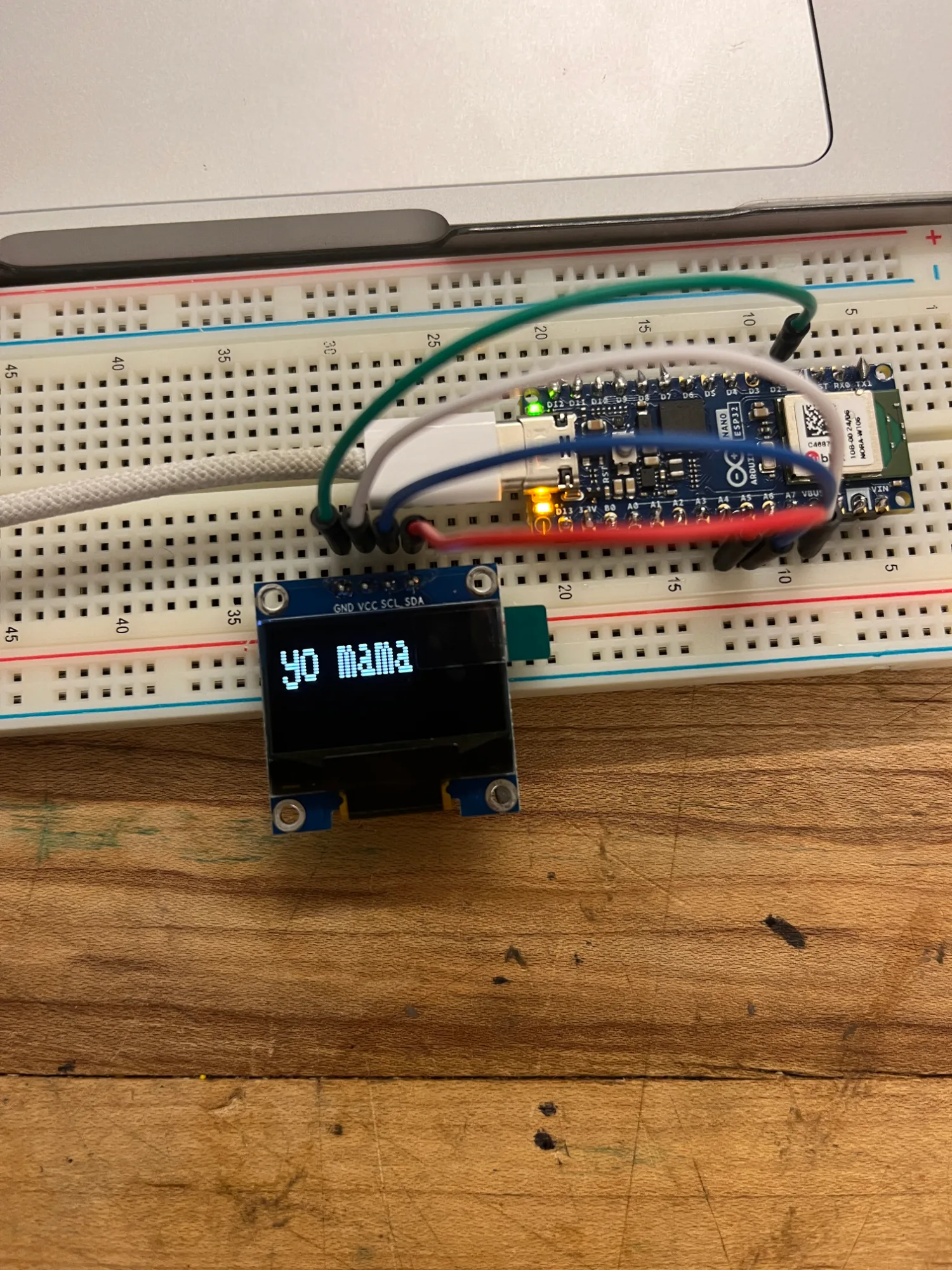
The first time I built with an Arduino, I realized I wasn't really buying a microcontroller. I was buying years of other people's work. Libraries, tutorials, forum posts, standardized pinouts all compressed into a little blue board. Eventually, if your prototype becomes a product, you dissolve that module again, and the Arduino disappears into a custom PCB.
One of the first things I loved about MIT was realizing the majors weren't rigid identities. Computer science could connect to linguistics. Mechanical engineering could dissolve into design. The institution itself had been modularized. MIT’s joint major systems (course 2 and 6) allow for students to major in the interdisciplinary field, mixing and matching courses to create something of their liking.
And pardon my tendency for semantic drift, but unlike the overuse of words like “whimsy” and “taste”, I believe that blurring the bounds of what a module is is essential for creating more efficient systems. This concept of “engineer” thinking is nothing more than understanding how to turn unstructured systems into organized modules, and allowing people who are traditionally “nontechnical” to also begin formalizing workflows and ideas is critical to the plot. To the layperson, a module is a black box of complexity we've agreed not to look beneath, but what if more people were aware that there was something further to explore? I believe this is the number-one driver of progress in most disciplines, not just a better chili recipe.
Coming back to the opening lines from a poem I wrote while lying in my bed one night. I think we tend to understand ourselves as a complete module: we have our interests and our possessions and our characteristics. But if we zoom into the soul, we begin to notice that we are constantly being shaped by the people around us; maybe we have certain mannerisms from roommates in college, certain words that we like to use from weird corners of the internet, maybe we forgo some of our personal preferences because we want to better connect with other people.
So maybe I don’t know where I end and where you begin, and maybe the edges of reality don’t want to be traced, and maybe that’s okay.